

Why Businesses Delay Equipment Upgrades - And How That Quietly Caps Growth
Most businesses recognise that equipment will not last forever, yet upgrades are often postponed until performance declines or breakdowns force action. As long as equipment continues to function, replacing it can feel unnecessary or risky - particularly without the structure and flexibility that Asset Finance can provide.
This hesitation is common, but it often carries hidden costs. Delaying upgrades can quietly restrict growth, reduce efficiency, and limit a business’s ability to respond to new opportunities. Older equipment may increase maintenance costs, slow output, or impact service quality. Because these effects build gradually, they are easy to overlook until operational pressure rises and growth becomes harder to achieve.
The Illusion of Stability Created by “Good Enough” Equipment
When equipment continues to operate, it creates a sense of stability. Businesses adapt processes and expectations around its limitations, slowly redefining what acceptable performance looks like. Over time, inefficiencies become normalised. Jobs take longer, output plateaus, and teams expend more effort to achieve the same results. Because these changes happen gradually, they are rarely linked back to equipment capability. Growth feels slower, but the cause is unclear. This illusion of stability can prevent businesses from recognising that their infrastructure no longer supports their ambitions or market expectations.
Why Upgrade Decisions Are Consistently Delayed
Equipment and Asset upgrades often fall behind immediate operational priorities. Payroll, sales activity, and daily pressures demand constant attention, pushing longer-term investment decisions aside. There is also uncertainty around timing and return - businesses hesitate to commit capital or fixed repayments during unpredictable periods, even when outdated equipment is already limiting efficiency.
Without the flexibility of Equipment Finance or Asset Finance, upgrades are frequently viewed as large, one-off expenses rather than structured, manageable investments. As a result, waiting can feel safer than acting. However, uncertainty rarely disappears, and delays often carry hidden costs. By postponing upgrades, businesses miss opportunities to improve productivity, reduce inefficiencies, and strengthen performance at the point where the impact would be greatest.
How Growth Becomes Constrained Without a Clear Warning
Outdated equipment rarely causes a sudden failure that signals the need for action. Instead, it creates small constraints that build over time. Capacity becomes harder to scale, peak demand is more difficult to manage, and delivery timelines become less reliable. To cope, businesses may hire additional staff, increase overtime, or decline work that stretches existing systems. These workarounds keep operations moving but prevent scalable growth. The business becomes busier without becoming more productive, a clear sign that equipment is limiting progress.
The Compounding Cost of Waiting Too Long
Delaying upgrades does not eliminate cost; it often increases it. Maintenance becomes more frequent, downtime more disruptive, and inefficiencies more deeply embedded in operations. Eventually, businesses may face the need for multiple upgrades at once, creating financial and operational strain. In competitive markets, falling behind technologically can also affect reputation and customer confidence. What begins as a cautious delay can reduce flexibility and force reactive decisions under pressure, limiting strategic options.
Reframing Equipment as an Enabler of Growth
Businesses that invest proactively tend to think differently about equipment. Instead of viewing it as an expense to delay, they see it as a tool that supports growth, efficiency, and resilience. Improved equipment enables smoother workflows, greater consistency, and reduced operational stress. Teams perform more effectively, customers experience better service, and planning becomes easier. This shift transforms equipment investment into a foundation for sustainable progress rather than a reluctant obligation.
How Asset Finance Enables Timely Action
Asset Finance addresses one of the most common reasons businesses delay essential upgrades: pressure on cash flow. Large upfront purchases can strain working capital, forcing companies to postpone investments or divert funds from other priorities such as staffing, marketing, or inventory. By spreading the cost of assets over fixed, predictable repayments, Asset Finance allows businesses to invest in the equipment, technology, or vehicles they need without depleting cash reserves. This preserves liquidity while maintaining financial stability and planning certainty.
In many cases, the improvements delivered by upgraded assets - such as increased efficiency, reduced downtime, lower maintenance costs, or improved output - help offset the cost of repayments over time. Rather than being a financial burden, the asset itself often contributes to improved profitability and operational performance. Crucially, Asset Finance enables businesses to act earlier. Delaying upgrades can carry hidden costs, including inefficiency, lost opportunities, higher repair expenses, and reduced competitiveness. By financing assets strategically, businesses ensure their infrastructure evolves in line with their ambitions, supporting sustainable growth rather than holding it back.
Structure your equipment funding around how your business actually operates.
Speak to EP Finance to understand which Asset Finance solution supports your next stage of growth.
Real Success Stories


-
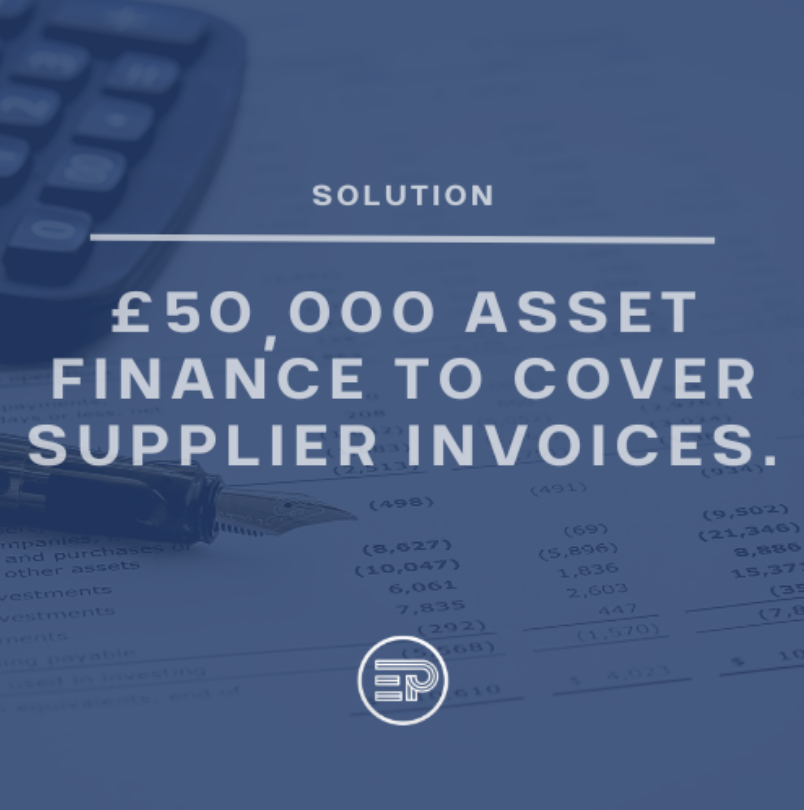
Elite Professional Finance supported a first-time entrepreneur in launching an Afrikana restaurant franchise in London, providing funding for fitout and supplier costs.
Through a tailored asset finance solution, we kept the project on track, on budget, and ready for a successful launch.
Financial Solutions You Can Trust
-

Client Centric
Our commitment to understanding each client's unique needs and using our panel of over 150 lenders to get the best options
-

Transparency & Trust
Honesty, transparency and ethical practices are the key to a good working business relationship. We will guide you throughout the process ensuring you are always in the loop
-

Streamlines Application
Our job is to take the stress away from you. Our process is designed to ensure that we can obtain your financial requirements without disturbing the growth of your business
-

Continued Support
We are always here for you. We will offer continuous support during and after the process.
Secure Your Financial Stability Today
Facing the threat of house repossession can be overwhelming, but there are ways to regain control of your situation. Whether you require immediate financial assistance, debt restructuring, or a personalised solution, EP Finance is here to guide you through every step. Fill out the form below to arrange a no-obligation consultation, and one of our experts will reach out to discuss the most suitable options for your circumstances.